Sea freight, export and import
Ocean Freight
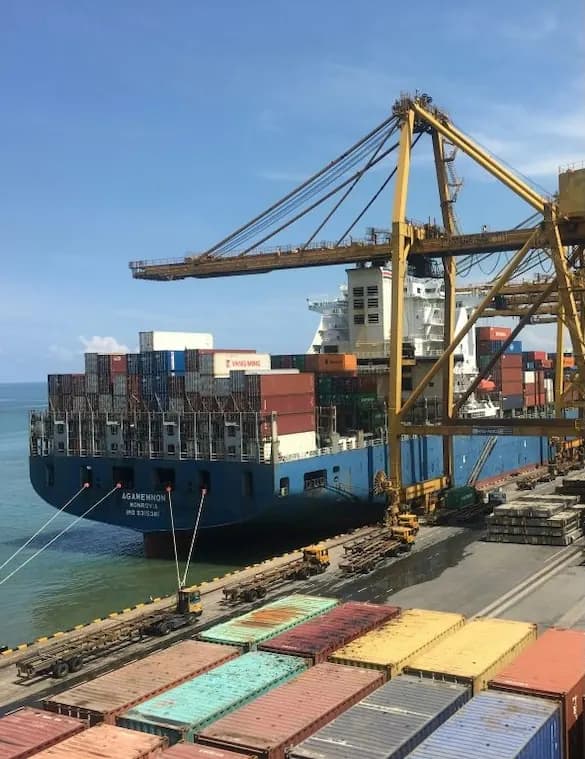
Ocean freight is the movement of cargo by container ship between ports. QShip books space from Nhava Sheva, Mundra and Chennai to North America, Europe and the Middle East, either as a full container (FCL) or as a share of one (LCL), and handles customs and delivery at both ends.
Which ocean freight option do you need?
Should you ship FCL or LCL?
FCL means the whole container is yours. LCL means your cargo shares a container with other shippers and is consolidated at a container freight station (CFS) before sailing. The right choice depends on volume, fragility and how much time you can give the consolidation step.
| FCL (full container) | LCL (shared container) | |
|---|---|---|
| Best for | Above roughly 15 CBM, or fragile and high-value goods | Below roughly 15 CBM, regular small replenishments |
| Priced by | Per container (20 ft or 40 ft) | Per CBM or per 1,000 kg, whichever is greater |
| Handling | Sealed at your factory, opened at destination | Loaded and unloaded at a CFS at both ends |
| Extra time | None beyond the sailing | Three to five days at origin and destination for consolidation |
| Risk | Lowest, nobody else touches the cargo | Higher, other shippers' cargo shares the box |
Which Indian ports does QShip ship from?
Most export cargo from Delhi NCR moves by rail to Mundra or Nhava Sheva (JNPT) through the inland container depots at Tughlakabad and Dadri. Cargo from the south sails from Chennai or Krishnapatnam, and cargo from the east from Kolkata or Haldia. We pick the gateway by sailing frequency and rail cut-off, not by habit.
- Nhava Sheva (JNPT), Maharashtra: widest choice of direct services to Europe and the US East Coast
- Mundra, Gujarat: fastest rail link from Delhi ICDs and strong Gulf and Mediterranean coverage
- Chennai, Tamil Nadu: south Indian gateway with good Far East and transshipment options
- Kolkata and Haldia, West Bengal: eastern gateway, feeder services via Colombo and Singapore
How long does ocean freight from India take?
Port-to-port sailing time is only part of the answer. Add rail transit from the ICD, the port cut-off, customs at both ends and final delivery. The ranges below are for the sailing itself, on services we book regularly.
| Destination | Direct or transshipment | Sailing time |
|---|---|---|
| Jebel Ali, UAE | Direct | 6 to 9 days |
| Rotterdam or Hamburg | Direct | 22 to 28 days |
| Felixstowe or London Gateway | Direct or via Colombo | 24 to 30 days |
| New York or Savannah | Direct or via Mediterranean hub | 28 to 36 days |
| Los Angeles or Long Beach | Via Singapore or Colombo | 30 to 40 days |
Add five to ten days at each end for inland movement and customs. A Delhi factory to a US warehouse is realistically six to eight weeks door to door by sea.
What documents does a sea shipment from India need?
- Commercial invoice and packing list, with HS codes for every line
- Shipping bill, filed by us on ICEGATE against your IEC and AD code
- Bill of lading, issued by the line or NVOCC once the vessel sails
- Certificate of origin where the buyer or destination customs asks for one
- Verified gross mass (VGM) declaration for every container under SOLAS
- Fumigation or phytosanitary certificate for wooden packing and agricultural goods
For DDP shipments to the USA we also file the ISF (10+2) at least 24 hours before loading. Missing that window is a fine of up to USD 5,000 per shipment, so we treat it as a hard cut-off.
Which Incoterms does QShip quote?
Most marketplace sellers need DDP, delivered duty paid, because Amazon and Walmart will not act as importer of record. We also quote FOB for buyers who control their own freight, CIF for letter of credit sales, and DAP where the consignee clears customs themselves. The quote states the term, so you know exactly which costs are inside it.
How does a ocean freight booking work with QShip?
- 1
Send the cargo details
Origin pin code, destination, CBM or container count, weight, commodity and the Incoterm you need.
- 2
Get a rate and a sailing
We reply with the route, the vessel cut-off and the all-in cost for the term quoted, the same working day.
- 3
Book and prepare documents
We confirm space, send the container or CFS booking, and collect invoice, packing list and any certificates.
- 4
Stuff, seal and file
Cargo is loaded at your factory or the CFS, VGM is declared, the shipping bill is filed and cleared.
- 5
Sail and track
You receive the bill of lading and a tracking number. Status updates run from gate-in to arrival.
- 6
Clear and deliver
Destination customs, duty payment on DDP shipments, and delivery to the warehouse or fulfilment centre.
Questions customers ask
Transit times, charges and document requirements on this page were last reviewed on 5 September 2026.
Services that usually go with ocean freight
- Customs ClearanceShipping bill and bill of entry filing, duty assessment and examination handling at Indian ports and airports.Read more
- DrayageContainer haulage between the port terminal, the CFS and your warehouse, with demurrage and detention tracked.Read more
- Export LogisticsIEC, AD code, shipping bill filing and export incentives for Indian businesses selling overseas.Read more
- Amazon FBA ShippingPrep, labelling and delivery into Amazon fulfilment centres in the USA, UK and Europe as an Amazon SPN partner.Read more