
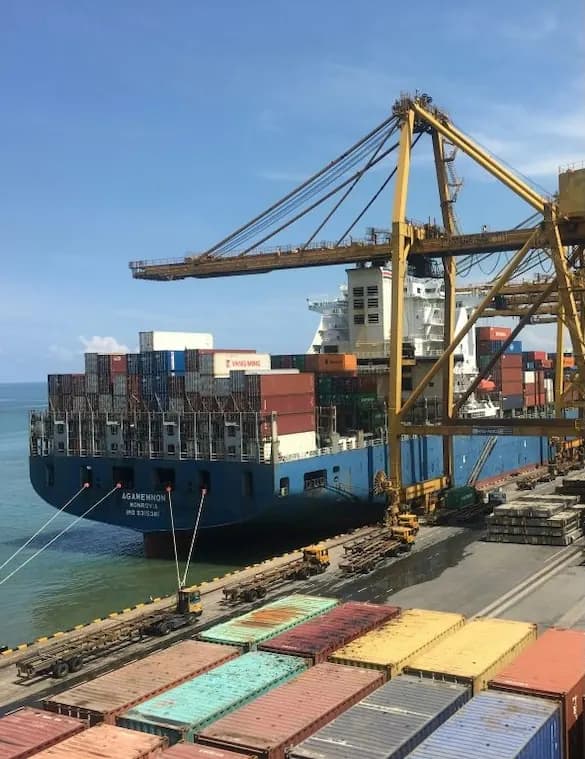
Full container load
FCL Shipping
FCL shipping is a sea freight booking where one container carries one shipper's cargo only. The box is stuffed and sealed at your factory or a CFS, moves by rail to the port, and is opened only at the destination. It suits consignments above about 15 CBM and anything fragile or high in value.
Which container size do you need?
Three sizes cover almost every export from India. The choice is about cubic capacity first and weight second, because most consumer goods cube out long before they weigh out.
| Container | Usable volume | Typical payload | Good for |
|---|---|---|---|
| 20 ft standard (20GP) | About 28 CBM loadable, 33 CBM gross | Up to 21,000 kg on most Indian routes | Dense goods: hardware, tiles, machined parts |
| 40 ft standard (40GP) | About 58 CBM loadable, 67 CBM gross | Up to 26,000 kg | Mixed cartons and pallets |
| 40 ft high cube (40HC) | About 68 CBM loadable, 76 CBM gross | Up to 26,000 kg | Light bulky goods: furniture, textiles, home decor |
Loadable volume is lower than the gross figure because cartons never fill a box perfectly. Plan on 85 percent of the gross cube for palletised cargo and 90 percent for floor-loaded cartons.
Where is the container stuffed, factory or CFS?
Factory stuffing means the empty container comes to your premises, is loaded under supervision and sealed there. Nobody handles the cargo again until the consignee breaks the seal. CFS stuffing means your cargo is trucked loose to a container freight station and loaded there, which suits factories with no space for a 40 ft trailer.
- Factory stuffing needs a hard standing for the trailer and about four hours of loading time per 40 ft
- Customs supervised factory stuffing requires a self-sealing permission or an officer visit, which we arrange
- CFS stuffing adds one handling step and a small charge per CBM, but removes the trailer constraint
What are VGM and port cut-off, and why do they matter?
Verified gross mass is the weighed mass of the loaded container, required under SOLAS before any container is loaded onto a vessel. Without it the line will not load the box. Port cut-off is the deadline for the container to be gated in with customs clearance complete, usually 48 to 72 hours before the vessel arrives.
- 1Weigh the loaded container at a certified weighbridge and obtain the slip
- 2Submit the VGM to the line through the port community system
- 3File the shipping bill and obtain the let export order
- 4Gate the container in at the ICD or port before the documentation cut-off
- 5Confirm the container has been loaded and request the bill of lading
What are demurrage and detention on an FCL shipment?
Detention is the charge for keeping the line's container outside the port beyond the free days. Demurrage is the charge for a container sitting inside the port or terminal beyond its free time. At destination both start counting from vessel discharge, and rates climb after the first slab, so a container stuck at customs for a week can cost more than the freight.
- Origin free days at Indian ICDs are usually five to seven days for pickup to gate-in
- Destination free time in the US is often three to five days, in Europe five to seven
- We book extended free time where the line offers it, and pre-clear DDP shipments so the box moves on day one
What is inside an FCL rate from India?
An all-in FCL quote from QShip lists the ocean freight, origin charges (terminal handling, documentation, seal, VGM), the inland rail or truck to the port, customs clearance, and on DDP terms the destination charges, duty and delivery. Surcharges such as bunker adjustment and peak season are shown as separate lines, so a change in one does not hide inside the total.
How does a FCL shipping booking work with QShip?
- 1
Confirm cargo and container size
We size the container from your packing list and confirm whether it is 20 ft, 40 ft or high cube.
- 2
Book space and the empty container
Space is booked on a named vessel and the empty box is released for pickup at the ICD.
- 3
Stuff and seal
Loading at your factory or the CFS, supervised, with the seal number recorded on the packing list.
- 4
Weigh, declare VGM and file
Weighbridge, VGM submission, shipping bill filing and let export order at the ICD.
- 5
Rail to port and load
The container moves to Mundra or Nhava Sheva and is loaded before cut-off. The bill of lading follows.
- 6
Discharge, clear and deliver
Destination clearance, drayage from the terminal and unloading at the warehouse within free time.
Questions customers ask
Transit times, charges and document requirements on this page were last reviewed on 5 September 2026.
Services that usually go with FCL shipping
- LCL ShippingPay for the container space you use. Your cargo is consolidated with other shippers at a CFS and sails on the same vessel.Read more
- Ocean FreightSea freight from Indian ports to the USA, Europe and the Middle East, booked as a full container or as part of one.Read more
- DrayageContainer haulage between the port terminal, the CFS and your warehouse, with demurrage and detention tracked.Read more
- Customs ClearanceShipping bill and bill of entry filing, duty assessment and examination handling at Indian ports and airports.Read more
- US WarehousingStorage and forwarding inside the United States, so replenishments to Amazon and Walmart ship domestically.Read more